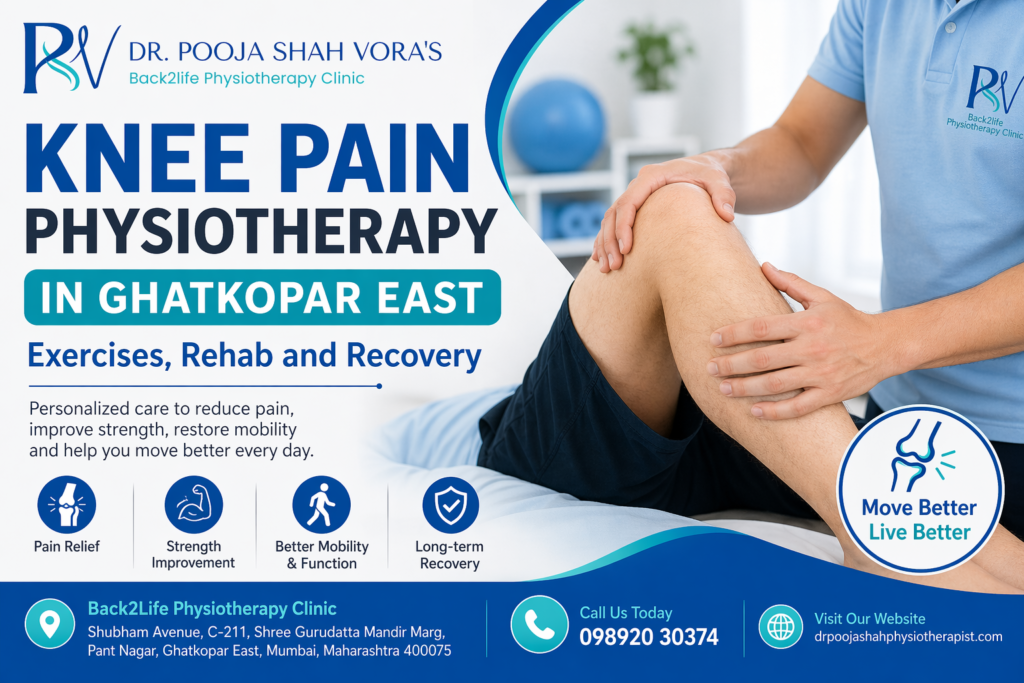
Knee Pain Physiotherapy in Ghatkopar East: Exercises, Rehab and Recovery
Knee pain can make everyday movement feel difficult. Climbing stairs, standing for long periods, walking, squatting, getting up from a chair, and even sleeping comfortably may become harder when the knee is painful or stiff. At Back2Life Physiotherapy Clinic, Dr. Pooja Shah Vora offers structured physiotherapy support for patients looking for knee pain physiotherapy in Ghatkopar East.
The goal is not just short-term relief. A proper physiotherapy plan focuses on improving joint mobility, muscle strength, stability, confidence in movement, and overall recovery so that daily life becomes easier and safer.
- Personalized knee pain rehab and exercise support
- Guidance for mobility, strength, balance, and recovery
- Support for daily activity improvement
- Convenient clinic location in Ghatkopar East
Local Physiotherapy Care
Professional knee pain physiotherapy support for patients in Ghatkopar East and nearby areas.
Exercise-Based Rehab
Programs may include guided exercises, strengthening, flexibility work, and recovery progression.
Movement Improvement
Focus on walking, stair climbing, standing balance, and functional comfort in daily life.
Recovery Planning
Structured physiotherapy support aimed at better mobility, confidence, and long-term knee care.
Understanding Knee Pain and Why Physiotherapy Matters
The knee is one of the most active joints in the body and plays a major role in everyday movement. It carries body weight, helps with walking and balance, and supports activities such as climbing stairs, bending, turning, sitting, standing, and exercise. Because of this constant use, knee pain is a common problem seen in adults, senior citizens, active individuals, and even younger people with lifestyle or sports-related strain.
Some people notice knee pain after walking or climbing stairs. Others may feel discomfort after sitting for a long time, swelling after activity, stiffness in the morning, weakness around the knee, or difficulty squatting and standing up. In some cases, the issue may come from overuse, poor movement mechanics, muscle weakness, ligament strain, or age-related wear and tear. In other cases, knee discomfort may develop after injury, post-surgery recovery, or a sudden change in physical activity.
Physiotherapy for knee pain focuses on understanding the movement problem, improving support around the knee joint, reducing strain, and building a safer path toward rehab and recovery.
For people searching for knee pain physiotherapy in Ghatkopar East, early evaluation and guided rehab can help improve movement quality and reduce the impact of knee pain on daily life.
Common Causes of Knee Pain
Knee pain does not always come from the same reason. A person may have pain in the front of the knee, inside of the knee, around the kneecap, after exercise, or only while using stairs. That is why a structured assessment matters.
Muscle Weakness
Weak quadriceps, hamstrings, glutes, and hip muscles can affect knee stability and increase joint stress during movement.
Overuse or Repetitive Strain
Repeated bending, walking, exercise overload, or sports strain may irritate the knee over time.
Poor Movement Mechanics
Improper alignment during walking, climbing stairs, squatting, or exercise can place more pressure on the knee joint.
Ligament or Soft Tissue Strain
Twisting, sudden movement, or overload may affect the soft tissues that help support the knee.
Age-Related Joint Changes
Stiffness, reduced cartilage tolerance, and lower mobility can contribute to long-term knee discomfort.
Post-Injury or Post-Surgery Recovery
Some patients need knee rehab to regain motion, strength, and confidence after a previous injury or procedure.
Other factors may include:
- Weight-bearing stress
- Prolonged standing
- Sports activity and training errors
- Sudden increase in walking or exercise
- Postural imbalance affecting the lower limb
- Mobility restriction at the hip or ankle influencing knee movement
Symptoms That May Need Knee Physiotherapy Evaluation
Knee pain can start mildly and gradually affect daily life more than expected. A physiotherapy evaluation may be useful if you are noticing:
- Pain while climbing stairs or getting up from a chair
- Discomfort during walking, squatting, bending, or standing for long periods
- Morning stiffness or tightness around the knee
- Knee weakness or reduced confidence while walking
- Difficulty kneeling or sitting cross-legged comfortably
- Swelling after activity
- Reduced range of motion in the knee
- Pain during exercise or after sports activity
- Recurring knee pain affecting routine tasks
A detailed physiotherapy plan can help identify the likely movement limitations and guide appropriate exercises, rehab progression, and recovery advice.
How Knee Pain Physiotherapy in Ghatkopar East Can Help
Physiotherapy for knee pain focuses on restoring function. That means helping the patient move better, strengthen the right muscle groups, improve mobility, and gradually return to normal activity with more comfort and confidence.
1. Assessment of Pain Pattern and Functional Limitation
The first step is understanding where the pain occurs, what movements trigger it, whether there is stiffness or swelling, and how much it affects walking, stairs, standing, exercise, or work.
2. Exercise-Based Rehabilitation
Knee rehab often includes carefully guided exercises aimed at improving muscle strength, joint support, and control. This may include work for the quadriceps, hamstrings, glutes, calves, and core depending on the patient’s needs.
3. Mobility and Flexibility Improvement
Tight muscles and reduced joint mobility can affect knee movement quality. Gentle mobility and flexibility work can help improve movement efficiency and reduce excess strain.
4. Balance and Functional Movement Training
Good knee rehab is not only about isolated exercises. It may also involve step training, sit-to-stand movement practice, walking correction, controlled bending, and balance work to support safer daily function.
5. Activity Modification and Recovery Guidance
Patients often benefit from advice on how to manage stairs, walking load, work posture, footwear choices, exercise pacing, and activity progression during recovery.
6. Long-Term Prevention
Once symptoms improve, the focus shifts to reducing the chance of repeated flare-ups through continued exercise, strength maintenance, and better movement habits.
Knee Pain Physiotherapy Exercises: Why the Right Exercises Matter
Many patients search online for knee pain exercises, but not every exercise suits every person. The right program depends on the location of pain, movement ability, age, activity level, and overall functional goals. A professional plan helps avoid overloading the knee with exercises that may not be appropriate in the early stage.
| Exercise Area | Why It May Matter in Rehab |
|---|---|
| Quadriceps strengthening | Supports better control and stability around the knee joint. |
| Hamstring and calf flexibility | May reduce tightness that affects knee mechanics during walking and bending. |
| Glute strengthening | Helps improve lower limb alignment and reduce unnecessary pressure on the knee. |
| Range of motion work | Supports smoother bending and straightening of the knee. |
| Balance and control exercises | Improves confidence, control, and function in day-to-day activity. |
Exercise selection should be based on assessment. Rehab is usually more effective when exercises are progressed step by step instead of copying generic routines.
Rehab and Recovery for Knee Pain
Recovery from knee pain often requires consistency rather than rushing. Some patients need early pain management and gentle movement restoration. Others may need strength rebuilding, functional retraining, and progressive return to activity. The rehab plan usually depends on:
- How long the pain has been present
- Whether there is stiffness, weakness, or swelling
- How much the knee affects walking, stairs, or work
- Whether there has been a prior injury
- The patient’s age, fitness, and daily routine
Typical recovery goals may include:
- Reducing discomfort during routine movement
- Improving bending and straightening of the knee
- Building strength around the knee and hip
- Improving walking pattern and stair confidence
- Supporting return to exercise or regular activity
- Reducing fear of movement and re-injury
Knee Issues Commonly Seen in Physiotherapy Practice
Patients looking for knee pain treatment in Ghatkopar East may come with many different concerns. Physiotherapy planning is usually adapted to the individual problem and functional goals.
- General knee pain during movement
- Stair-related knee discomfort
- Post-exercise knee strain
- Muscle weakness affecting knee stability
- Stiff knee after inactivity
- Knee rehab after injury
- Knee recovery after reduced mobility
- Balance and walking confidence issues linked to knee discomfort
Persistent pain, major swelling, sudden inability to bear weight, or significant instability should be assessed properly so the rehab plan can be tailored safely.
Who May Benefit from Knee Pain Physiotherapy?
Knee pain physiotherapy may be helpful for:
- Office workers with reduced movement and joint stiffness
- Homemakers who do repeated standing, stair use, and bending
- Senior adults with age-related mobility concerns
- People returning to walking or exercise after a long break
- Fitness enthusiasts with overuse-related knee discomfort
- Individuals recovering from a previous knee injury
- Patients who want guided knee strengthening and rehab progression
In many cases, knee pain becomes more frustrating not only because of discomfort, but because it limits independence and routine movement. A good rehab plan aims to improve both.
What to Expect During Knee Pain Physiotherapy Sessions
At Back2Life Physiotherapy Clinic, the approach for knee rehab begins with understanding symptoms, daily activity demands, movement restrictions, and physical findings. Depending on the patient’s needs, sessions may include:
Assessment
Discussion of symptoms, pain triggers, activity issues, joint movement, strength, and function.
Mobility Work
Movement guidance aimed at improving stiffness, flexibility, and comfortable knee motion.
Rehab Exercises
Targeted exercises for strength, control, balance, posture, and lower limb support.
Home Program
Practical advice for stairs, walking, sitting, standing, and continuing rehab between sessions.
A clear rehab structure helps patients stay consistent, understand their progress, and work toward recovery with more confidence.
Why Choose Dr. Pooja Shah Vora for Knee Pain Physiotherapy in Ghatkopar East?
Patients often look for a physiotherapist who can guide them beyond temporary relief and help them build proper movement, strength, and functional recovery. A structured and patient-focused plan can make a meaningful difference in rehab.
- Accessible clinic location in Ghatkopar East
- Physiotherapy support tailored to activity level and recovery goals
- Focus on exercises, rehab, mobility, and recovery planning
- Guidance for day-to-day movement improvement
- Supportive care for long-term knee function and confidence
Looking for Knee Pain Treatment or Knee Rehab in Ghatkopar East?
If you are searching for terms like knee pain physiotherapy in Ghatkopar East, physiotherapist for knee pain in Ghatkopar East, knee rehabilitation in Ghatkopar East, or best physiotherapist for knee pain in Ghatkopar East, this page is built to help you find relevant local physiotherapy care.
Back2Life Physiotherapy Clinic is conveniently located in Ghatkopar East and can serve patients from Pant Nagar, nearby Ghatkopar areas, and surrounding parts of Mumbai who are looking for knee rehab and recovery support.
Frequently Asked Questions
Book a Consultation for Knee Pain Physiotherapy in Ghatkopar East
If knee pain is affecting your walking, stairs, work routine, exercise, or daily comfort, a structured physiotherapy assessment can help you understand the issue better and begin a guided rehab and recovery plan.