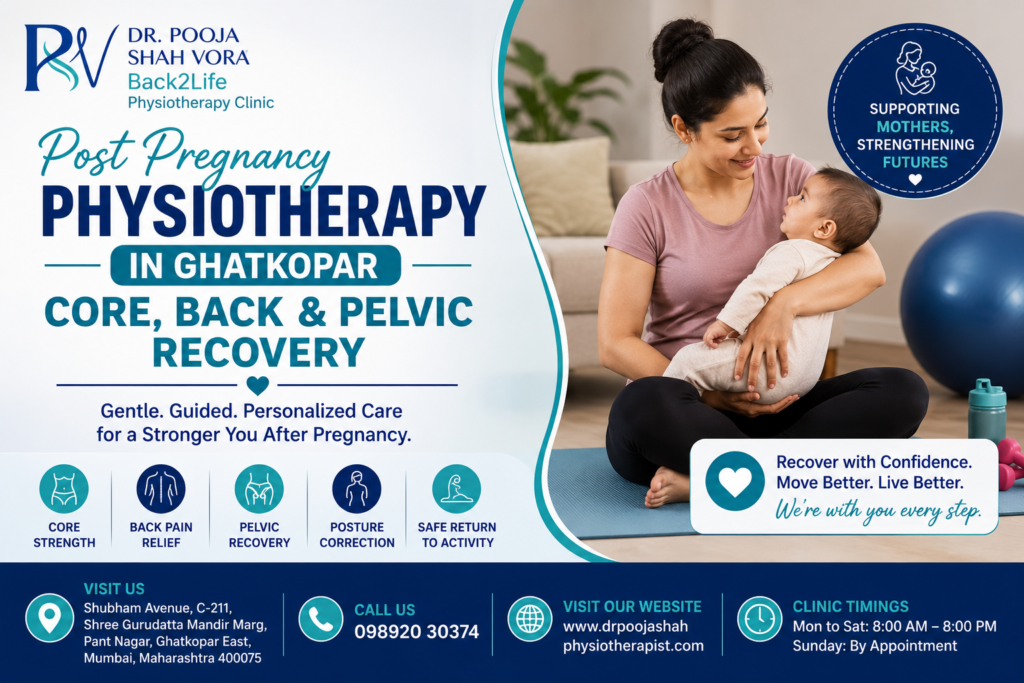
Post Pregnancy Physiotherapy in Ghatkopar: Core, Back & Pelvic Recovery
Pregnancy and childbirth bring many changes to the body. In the weeks and months after delivery, many women notice back pain, abdominal weakness, poor posture, pelvic discomfort, reduced stamina, heaviness, and difficulty returning to normal movement comfortably. These changes are common, but that does not mean they should always be ignored.
At Back2Life Physiotherapy Clinic, Dr. Pooja Shah Vora offers post pregnancy physiotherapy in Ghatkopar with a focus on core recovery, back care, pelvic rehabilitation, posture correction, and safe movement support after delivery.
- Support for postnatal core and abdominal recovery
- Back pain and posture-focused physiotherapy
- Pelvic recovery and guided rehabilitation
- Safe movement advice for new mothers
Core Recovery Support
Guided physiotherapy to support abdominal control, breathing coordination, and safe postnatal strengthening.
Back & Posture Care
Help for post-delivery back pain, feeding posture strain, lifting strain, and everyday body mechanics.
Pelvic Rehabilitation
Support for pelvic stability, comfort, and movement confidence depending on postnatal recovery needs.
Safe Return to Activity
Gradual recovery guidance tailored to the body’s condition after delivery and daily motherhood demands.
Why Post Pregnancy Physiotherapy Matters
During pregnancy, the body adapts continuously to support the growing baby. Muscles stretch, posture changes, ligaments become more relaxed, and load on the back, pelvis, and abdominal wall increases. After delivery, the body does not automatically return to its earlier pattern overnight. Recovery takes time, and some women may need structured support to regain strength, control, comfort, and confidence in movement.
New mothers are often busy caring for the baby, feeding, lifting, carrying, and handling sleep disruption. These demands can add more physical stress to a body that is already recovering. Because of this, symptoms such as lower back pain, abdominal weakness, poor posture, pelvic heaviness, and fatigue can become more noticeable in daily life.
Post pregnancy physiotherapy in Ghatkopar can help support recovery by focusing on core control, posture, pelvic function, back care, movement retraining, and a safer return to normal daily activity.
Common Physical Changes After Pregnancy
Every woman’s recovery journey is different. Some feel stronger within a few weeks, while others continue to notice weakness, discomfort, or movement changes for much longer. Common post-pregnancy physical concerns may include:
Core Weakness
The abdominal wall and deep support system may feel weaker after pregnancy, affecting overall stability and body control.
Back Pain
Lower back discomfort is common after delivery, especially with feeding posture, lifting the baby, carrying weight, and sleep-related strain.
Postural Strain
Rounded shoulders, upper back tightness, neck pain, and slouching may develop during feeding and baby care routines.
Pelvic Discomfort
Some women experience reduced pelvic support, heaviness, or discomfort that may need careful assessment and guided rehab.
Reduced Strength and Endurance
Many mothers feel physically tired, weaker, or less stable during walking, standing, or regular household movements.
Difficulty Returning to Exercise
A safe return to fitness, walking routines, or postnatal activity often benefits from structured progression instead of rushing.
Other symptoms some women may notice:
- Abdominal separation concerns
- Pelvic floor weakness
- Pain while getting up from bed or the floor
- Hip tightness or pelvic instability
- Fatigue during daily activity
- Fear of doing exercise incorrectly after delivery
How Post Pregnancy Physiotherapy Can Help
Postnatal physiotherapy is not only about “exercise.” It involves understanding how the body has changed and what it now needs to recover safely. That may include breathing coordination, posture correction, pelvic support, gradual strengthening, and better daily movement habits.
1. Core Recovery and Re-Activation
Core recovery after pregnancy is usually not about intense abdominal exercises in the beginning. It often starts with breathing, deep support activation, abdominal awareness, and gradual progressions that match the body’s recovery stage.
2. Back Pain Relief and Posture Correction
New mothers often spend long hours feeding, carrying, and bending. Physiotherapy may help improve posture, reduce overload on the back, and build better support for daily baby-care activities.
3. Pelvic Recovery Support
The pelvic region undergoes major physical changes during pregnancy and delivery. Depending on symptoms and recovery status, physiotherapy may help support pelvic comfort, control, and function.
4. Safe Strengthening Progression
A good post pregnancy program usually builds gradually. The aim is to support real recovery rather than rushing into advanced exercises that the body may not be ready for yet.
5. Better Daily Body Mechanics
Baby care involves repeated lifting, holding, bending, feeding, carrying, and low sleep. Physiotherapy guidance may help make these movements more comfortable and body-friendly.
6. Confidence in Returning to Activity
Many women are unsure when and how to restart exercise after delivery. A structured plan can help create a safer return to walking, fitness, stretching, and normal activity.
Core, Back and Pelvic Recovery After Delivery
These three areas are closely connected after pregnancy. When core support is reduced, the back may work harder. When posture changes, the neck and upper back may become more tense. When pelvic support is affected, movement confidence may also reduce. That is why post pregnancy physiotherapy often looks at the body as a complete system rather than only one isolated symptom.
| Recovery Area | Why It Matters After Pregnancy | How Physiotherapy May Help |
|---|---|---|
| Core | Supports trunk stability, movement control, and abdominal function | Breathing-based activation, gradual strengthening, support awareness |
| Back | Often overloaded during baby care, lifting, and posture strain | Posture correction, strengthening, flexibility, movement retraining |
| Pelvic region | Important for support, comfort, stability, and confidence in movement | Pelvic recovery guidance, movement control, gradual rehab planning |
Who May Benefit from Postnatal Physiotherapy?
Post pregnancy physiotherapy may be helpful for:
- Women experiencing back pain after delivery
- New mothers feeling abdominal weakness or low core support
- Women with posture strain from feeding or baby care
- Mothers who want to return to exercise safely
- Women noticing pelvic discomfort or movement hesitation
- Women with reduced strength and stamina after childbirth
- Mothers who want guided recovery rather than guessing what exercises to do
What Post Pregnancy Physiotherapy Sessions May Include
Every postnatal recovery plan should be individualized. Sessions may vary based on symptoms, delivery history, recovery stage, and physical demands at home. A session may include:
Breathing and core activation
To help reconnect with deep support muscles in a safe and progressive way.
Posture correction work
To reduce strain from feeding, carrying, and long sitting.
Back and pelvic support exercises
To improve comfort and movement confidence during daily routines.
Mobility and flexibility drills
To ease stiffness in the spine, hips, shoulders, and surrounding muscles.
Functional movement guidance
Support for lifting, carrying, feeding posture, getting up, and daily baby-care tasks.
Gradual return-to-activity planning
To help new mothers progress safely instead of rushing recovery.
When Should You Consider Physiotherapy After Pregnancy?
Women may consider postnatal physiotherapy when symptoms are persistent, when recovery feels slower than expected, or when movement discomfort starts interfering with daily baby care and routine life. It can also be valuable when a mother wants a guided recovery plan instead of depending only on generic online exercises.
Early support can often help build better recovery habits before strain patterns become more established.
What to Expect During a Post Pregnancy Physiotherapy Assessment
At Back2Life Physiotherapy Clinic, post pregnancy physiotherapy can begin with understanding the mother’s symptoms, recovery stage, activity level, posture, movement concerns, and everyday childcare demands. Depending on the assessment, sessions may include:
Assessment
Discussion of symptoms, posture strain, back pain, weakness, pelvic concerns, and daily routine.
Recovery Planning
Identifying safe goals for core, back, pelvic, and movement recovery.
Guided Physiotherapy
Stepwise exercises and support tailored to the body’s condition and stage of recovery.
Home Advice
Practical tips for posture, baby handling, movement habits, and gradual progression at home.
Why Choose Dr. Pooja Shah Vora for Post Pregnancy Physiotherapy in Ghatkopar?
Postnatal recovery needs patience, clarity, and a practical understanding of real-life motherhood demands. Physiotherapy should feel supportive, realistic, and appropriate to the body’s stage of healing and strength.
- Patient-focused physiotherapy care
- Support for core, back, pelvic, and postural recovery
- Guidance suited to daily baby care routines
- Convenient clinic access in Ghatkopar East
- Focus on safe, gradual, and functional recovery
Looking for Post Pregnancy Physiotherapy in Ghatkopar?
If you are searching for terms like post pregnancy physiotherapy in Ghatkopar, postnatal physiotherapy in Ghatkopar, core recovery after pregnancy in Ghatkopar, back pain after delivery physiotherapy in Ghatkopar, or pelvic recovery physiotherapy in Ghatkopar, this page is designed to help you understand how postnatal physiotherapy may support recovery.
Back2Life Physiotherapy Clinic is based in Ghatkopar East and supports women looking for structured and personalized post pregnancy physiotherapy care in the local area.
Frequently Asked Questions
Book a Consultation for Post Pregnancy Physiotherapy in Ghatkopar
If you are dealing with back pain, weakness, posture strain, or recovery concerns after delivery, a structured physiotherapy assessment can help you understand the next steps for safer and more comfortable recovery.