
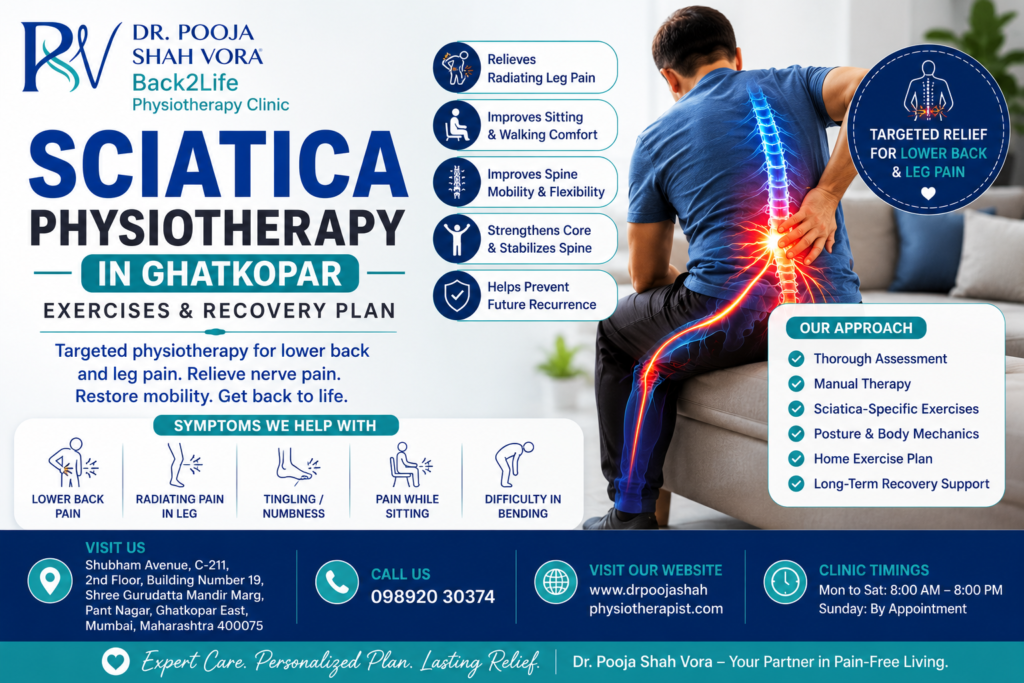
Sciatica Physiotherapy in Ghatkopar: Exercises & Recovery Plan
Sciatica can be one of the most uncomfortable forms of back-related pain because it often travels beyond the lower back into the buttock, thigh, calf, or foot. Some people describe it as sharp pain, burning, tingling, pulling, numbness, or radiating discomfort that worsens while sitting, bending, standing for long periods, or getting up after rest.
At Back2Life Physiotherapy Clinic, Dr. Pooja Shah Vora offers sciatica physiotherapy in Ghatkopar with a focus on pain relief support, posture correction, guided exercises, movement recovery, and a structured rehabilitation plan tailored to the patient’s symptoms and daily routine.
- Support for radiating leg pain and mobility discomfort
- Guided sciatica exercises and recovery planning
- Posture, movement, and back care support
- Personalized physiotherapy approach in Ghatkopar
Radiating Pain Support
Structured physiotherapy support for people dealing with lower back pain that travels into the leg.
Exercise-Based Care
Guided physiotherapy exercises chosen based on symptoms, movement pattern, and daily activity needs.
Mobility Recovery
Support for sitting tolerance, walking comfort, posture, bending mechanics, and movement confidence.
Personalized Recovery Plan
Recovery guidance tailored to the patient’s severity, routine, and physical limitations.
What Is Sciatica?
Sciatica is a term commonly used when pain travels along the path of the sciatic nerve, usually starting from the lower back or buttock and moving down one leg. The symptoms can vary from mild to quite limiting. Some people mainly feel a dull pulling pain, while others report sharp discomfort, burning sensation, tingling, numbness, or pain that worsens after long sitting or certain movements.
Sciatica is not the same as ordinary lower back pain. What makes it different is the radiating nature of symptoms. The discomfort may move from the back into the buttock, thigh, calf, or foot depending on the pattern of nerve irritation and movement sensitivity.
Sciatica physiotherapy in Ghatkopar usually focuses on understanding the source of movement irritation, reducing mechanical strain, improving posture, supporting mobility, and building a safer exercise-based recovery plan.
Common Symptoms of Sciatica
Sciatica symptoms are not always identical from one person to another. The location, intensity, and triggers may differ. Common symptoms may include:
Lower back pain with leg pain
Pain may begin in the lower back or buttock and move down one side of the leg.
Burning or shooting sensation
Some people feel a sharp, electric, or burning type of discomfort along the leg.
Tingling or numbness
Nerve-related symptoms may include pins and needles or reduced sensation in part of the leg or foot.
Pain while sitting
Many people notice that prolonged sitting worsens their symptoms significantly.
Difficulty walking comfortably
Walking tolerance may reduce when pain or pulling sensations increase with movement.
Stiffness while bending or standing
Certain daily movements may feel more restricted or guarded because of leg pain and back sensitivity.
Common Causes and Contributing Factors
Sciatica-like symptoms may happen when the nerve or surrounding structures become irritated or mechanically stressed. The exact cause should be assessed carefully, because treatment depends on the movement pattern, severity, and clinical presentation.
- Lower back mechanical strain
- Disc-related irritation
- Prolonged sitting and poor posture
- Reduced core support and spinal stability
- Sudden lifting or bending strain
- Tightness in surrounding muscles affecting movement mechanics
- Repetitive travel or sedentary routine
In many people, it is not just one single factor but a combination of posture, workload, sitting habits, weakness, flexibility limits, and daily movement strain.
How Physiotherapy Can Help in Sciatica Recovery
Physiotherapy aims to improve how the spine, pelvis, hips, and surrounding muscles are functioning. Rather than focusing only on temporary relief, a good plan also looks at the movements and daily habits that may be maintaining the problem.
1. Assessment of Movement and Symptom Pattern
The first step is understanding how the symptoms behave. Does pain worsen with sitting, bending, walking, coughing, getting out of bed, or standing? Is the leg pain more intense than the back pain? Is there stiffness, guarding, or reduced mobility? These details guide the plan.
2. Pain Relief and Load Reduction Strategies
Early physiotherapy may focus on reducing mechanical irritation through position advice, posture correction, gentle guided movement, and symptom-sensitive activity modification.
3. Mobility and Flexibility Improvement
Tight hips, stiff back movement, and reduced flexibility may contribute to abnormal loading. Guided mobility work can help improve movement quality gradually.
4. Strengthening and Stability Support
Core muscles, glutes, and postural support systems are often important in long-term sciatica recovery. Gradual strengthening may help the body handle daily movement with better support.
5. Exercise-Based Recovery Planning
Not all sciatica exercises suit every person. The correct exercise approach depends on symptom pattern, irritability, pain behavior, and physical assessment findings.
6. Recurrence Prevention
Once symptoms settle, the next goal is reducing the chance of repeated flare-ups by improving movement habits, posture, flexibility, and strength maintenance.
Sciatica Exercises: Why the Right Plan Matters
Many people search online for sciatica stretches and nerve pain exercises. However, generic exercises are not always suitable for every stage or every type of sciatica presentation. In some cases, a movement may help one person but aggravate another. That is why proper exercise progression matters.
| Exercise Focus | Why It May Matter |
|---|---|
| Gentle mobility exercises | May help reduce stiffness and improve movement tolerance in the back and hips. |
| Core activation | Supports spinal control and load distribution during everyday movement. |
| Hip and glute strengthening | Improves lower-body support and movement mechanics. |
| Postural exercises | May reduce strain created by poor sitting and standing habits. |
| Functional movement training | Helps patients return to bending, walking, sitting, and daily tasks with more confidence. |
The best sciatica exercise program is usually symptom-guided and stage-specific. Early recovery may need protection and gentle movement, while later stages may focus more on strengthening and function.
Recovery Plan for Sciatica
Recovery from sciatica often needs a stepwise approach. Some people improve quickly, while others need a more gradual plan depending on how long symptoms have been present and how intense they are.
Early Phase Goals
- Reduce pain triggers and movement irritation
- Improve comfort during sitting, standing, and getting up
- Start gentle guided movements
- Understand symptom-friendly postures and positions
Middle Phase Goals
- Improve mobility and flexibility
- Begin progressive strengthening
- Reduce fear of movement
- Improve walking and daily activity tolerance
Later Phase Goals
- Restore functional movement confidence
- Return more comfortably to routine activities
- Build resilience against recurrence
- Continue long-term posture and strength maintenance
Who May Benefit from Sciatica Physiotherapy?
Physiotherapy may be helpful for:
- People with lower back pain radiating into one leg
- Patients struggling with sitting-related sciatic pain
- Working professionals with prolonged sitting and travel strain
- People with stiffness and mobility restriction linked to nerve-related pain
- Patients seeking a guided exercise-based recovery plan
- People who want to return safely to walking, work, and daily activity
What Sciatica Physiotherapy Sessions May Include
A sciatica physiotherapy session may be tailored based on severity, irritability, posture, movement sensitivity, and daily functional demands. Sessions may include:
Movement assessment
To understand the pain pattern, limitations, and response to different positions or actions.
Posture and sitting advice
To reduce daily load and support a more symptom-friendly routine.
Guided mobility work
To ease stiffness and restore more comfortable movement.
Strengthening exercises
To improve support from the core, hips, and surrounding muscles.
Recovery planning
To help patients understand progression, pacing, and realistic return to activity.
Home exercise guidance
To continue recovery safely between sessions in a structured way.
When Should You Consider Physiotherapy for Sciatica?
It may be useful to consider physiotherapy when pain keeps traveling into the leg, sitting becomes difficult, walking feels limited, symptoms are recurring, or daily routines are being disrupted by radiating lower back and leg pain. A guided recovery plan may help patients avoid relying only on rest while movement confidence keeps reducing.
What to Expect During a Sciatica Physiotherapy Assessment
At Back2Life Physiotherapy Clinic, sciatica physiotherapy can begin with understanding the patient’s symptom pattern, movement sensitivity, posture, daily activities, and functional limitations. Depending on the assessment, sessions may include:
Assessment
Discussion of pain pattern, triggers, leg symptoms, posture, and daily functional impact.
Recovery Strategy
Planning symptom-sensitive movement, posture advice, and exercise direction.
Guided Physiotherapy
Stepwise support based on pain behavior, mobility, and strengthening needs.
Home Program
Structured exercises and practical movement guidance to continue safely between visits.
Why Choose Dr. Pooja Shah Vora for Sciatica Physiotherapy in Ghatkopar?
Sciatica recovery often needs a careful balance between relief, safe movement, exercise progression, and practical lifestyle guidance. Physiotherapy should be supportive, individualized, and relevant to the patient’s actual daily routine.
- Patient-focused physiotherapy care
- Support for sciatica-related leg pain and movement discomfort
- Exercise-based recovery planning
- Posture and functional movement guidance
- Convenient clinic access in Ghatkopar East
Looking for Sciatica Treatment in Ghatkopar?
If you are searching for terms like sciatica physiotherapy in Ghatkopar, physiotherapy for sciatica in Ghatkopar, sciatica exercises in Ghatkopar, leg pain physiotherapy in Ghatkopar, or sciatica recovery plan in Ghatkopar, this page is designed to help you understand how physiotherapy may support recovery.
Back2Life Physiotherapy Clinic is based in Ghatkopar East and supports patients looking for structured physiotherapy guidance for radiating lower back and leg pain in the local area.
Frequently Asked Questions
Book a Consultation for Sciatica Physiotherapy in Ghatkopar
If you are dealing with radiating leg pain, lower back discomfort, sitting-related pain, or movement limitations, a structured physiotherapy assessment can help you understand the next steps for safer recovery and better day-to-day comfort.